Most people think of a car accident as a single event.
A few seconds of screeching tires. The impact. The flashing lights. The tow truck arriving to haul away damaged vehicles.
But for the people involved, the accident itself is often the shortest part of the experience.
A collision may last only a few seconds. The questions that follow can last for weeks or months.
Is everyone okay?
Do we need medical attention?
Can the car be repaired?
How am I getting to work tomorrow?
Who pays for all of this?
What happens next?
Those questions rarely arrive all at once. They unfold over time, creating a series of challenges most people never expected when they started their day.
One of the most common themes we hear from clients is not anger. It is not frustration. It is uncertainty.
People describe feeling fearful, overwhelmed, or simply unsure of what to do after a car accident. They are suddenly dealing with medical appointments, insurance companies, vehicle repairs, and financial concerns while still trying to process what happened. The accident may be over, but life suddenly feels far more complicated than it did the day before.
The First Questions Are Usually About People
When most people picture the aftermath of a crash, they think about insurance claims and damaged vehicles.
That may be what bystanders see.
It is rarely what the people involved are thinking about.
The first questions are usually about people.
A parent turns around to check on the children in the back seat. A passenger asks if everyone is okay. Someone feels pain and wonders whether it is serious. Someone else is sitting in shock, trying to understand how an ordinary day changed so quickly.
They weren’t worried about a settlement.
They weren’t worried about vehicle value.
They were worried about people.
That is often where the process begins. Before anyone asks about liability or repair costs, they want to know whether the people they care about are safe.
Then Life Starts Getting Complicated
As the shock begins to wear off, a different set of questions starts to emerge.
The vehicle may need repairs. Medical appointments begin appearing on the calendar. Phone calls need to be returned. Work schedules may need to be adjusted. Insurance companies start requesting information.
Each individual problem may seem manageable on its own.
Together, they can feel overwhelming.
Many people discover that even a relatively straightforward accident creates challenges they never anticipated. One of the most common concerns involves transportation. A rental vehicle may help temporarily, but what happens if repairs take longer than expected? What happens if liability is still being disputed? What happens when the deadline on the rental arrives, and the vehicle is still sitting in a repair shop?
Those situations are more common than many people realize.
In some cases, vehicles remain in repair shops for months while insurance companies work through disagreements. Families adapt by borrowing vehicles, sharing transportation, or rearranging schedules around circumstances they never planned for. Life keeps moving forward, even when the accident feels unresolved.
The accident happened in seconds. The disruption can last much longer.
The Questions Get Bigger
At first, most of the questions after a car accident are practical.
How do I get home?
Where is my vehicle?
Who do I call?
As days turn into weeks, however, many people realize the accident affected more than their transportation.
The questions start getting bigger.
How long will treatment take?
Will these symptoms improve?
How much work am I going to miss?
What happens if I cannot do the things I normally do?
For some people, these questions remain temporary inconveniences. For others, they begin affecting major parts of daily life.
A person whose job requires physical labor may find certain tasks difficult or impossible while recovering. Someone who enjoys hiking, biking, golfing, or other recreational activities may suddenly find those activities are no longer part of their routine. Parents may find themselves relying on family members for help while they attend appointments or manage limitations they did not have before the accident.
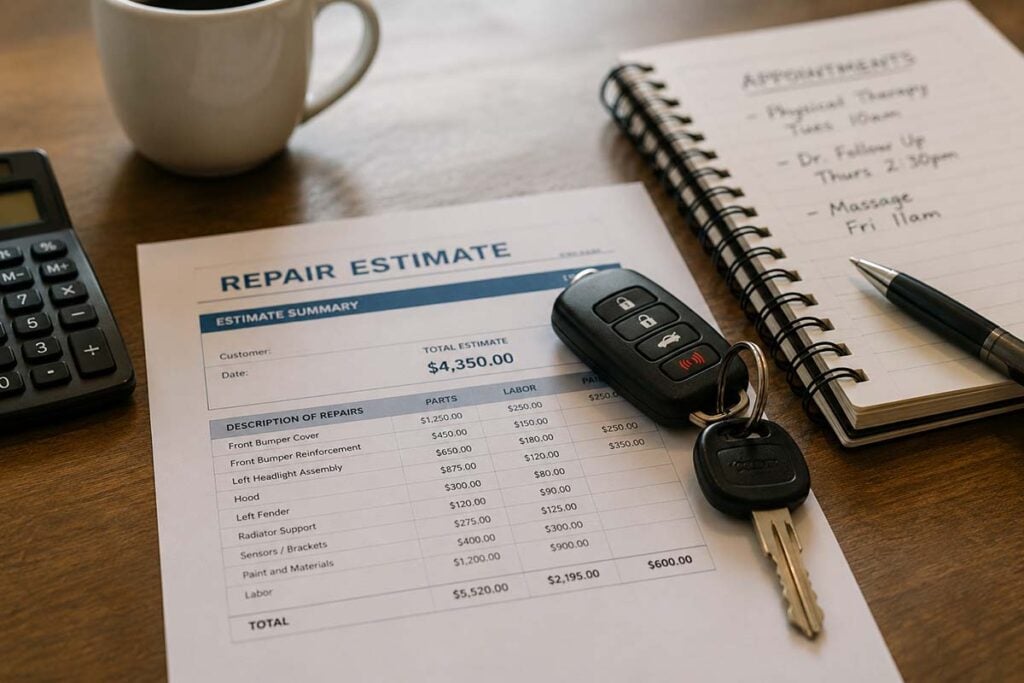
None of these concerns appear on a repair estimate.
Yet they often have a much greater impact on daily life than the damage to the vehicle itself.
Recovery Is About More Than Injuries
When people hear the phrase “car accident recovery,” they often think about healing from physical injuries.
That is certainly part of it.
But recovery is usually much broader than that.
Recovery means rebuilding routines that were interrupted. It means regaining confidence, restoring independence, and finding a way back to normal life after months of uncertainty.
Many people who experience car accident injuries eventually discover that healing and recovery are not exactly the same thing. An injury may improve long before life feels normal again.
Even people who avoid serious injuries often notice lingering effects. Years later, some still pay closer attention when driving through the intersection where the accident occurred. A familiar road suddenly feels different because it carries a memory that was not there before.
The vehicle may be repaired.
The claim may be resolved.
The experience remains.
That does not mean people stay stuck there. It simply means accidents affect more than sheet metal. They affect confidence, routines, finances, relationships, and daily life in ways that are not always obvious from the outside.
Why People Remember the Help
One recent client described Injury Smart Law as a “lifeline” after an accident.
That word stands out. Not because it refers to a settlement. Not because it refers to a legal strategy. Because it captures what many people are really looking for after a car accident. – Clarity. Guidance. Someone who understands the process and can help carry part of the burden while they focus on moving forward.
When people look back on difficult accidents, they rarely remember every phone call, document, or insurance conversation. Instead, they remember the people who helped them through the uncertainty.
The friend who checked in.
The family member who helped with responsibilities at home.
The medical provider who listened.
The person who explained what came next.
The team that helped them navigate a process they had never experienced before.
One client described feeling “panicked, fearful, and unsure” after an accident. Another said the firm took a difficult situation and made it easier. Others have talked about finally being able to focus on recovery because someone else was helping manage the details.
The common theme is not the accident itself. It is the relief that comes when uncertainty begins to fade.
A car accident may begin with an impact. But the real challenge is often everything that follows. And sometimes, having the right help makes all the difference.