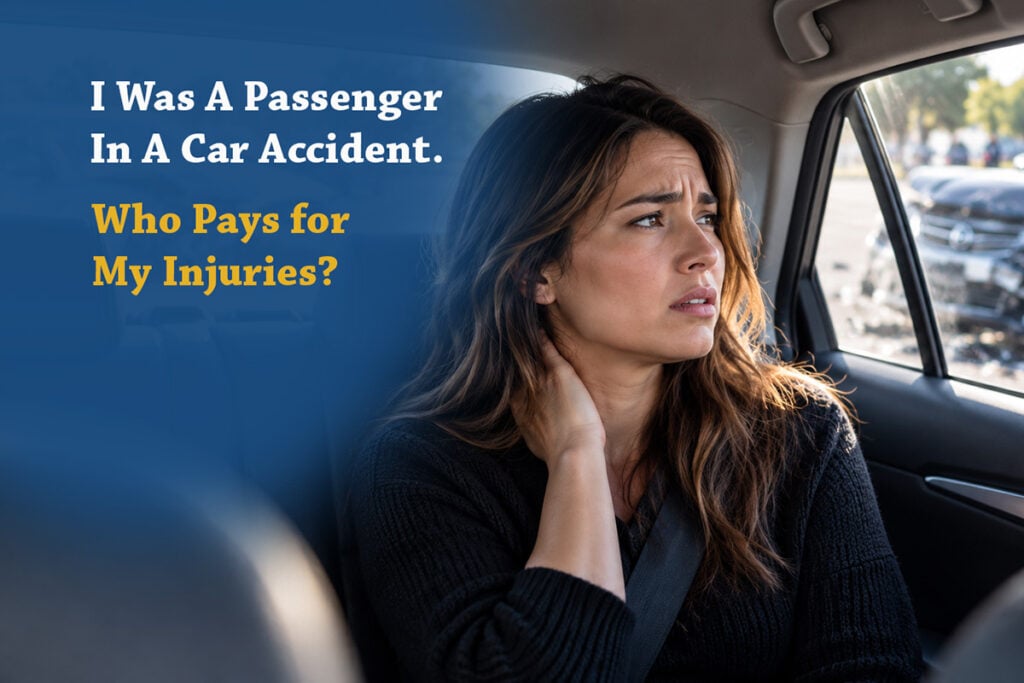
You were riding with a friend — heading home from dinner or just catching a ride across town — when suddenly you’re in a car accident. Maybe you saw it coming. Maybe you didn’t even have time to react. Either way, you’re now dealing with an injury you didn’t expect.
Being a passenger puts you in a different position from the drivers involved. You weren’t behind the wheel, but your injuries may still involve one or more of the drivers’ insurance policies. If the driver was a friend or family member, you might also have questions about what making a claim against their insurance actually means.
Figuring out whose insurance may cover your injuries can be confusing, especially when you weren’t the one driving. The first step is understanding whose insurance may come into play.
Whose Insurance Covers Your Injuries?
If the driver you were riding with caused the accident, their auto liability insurance may cover your injuries. That can feel awkward if the driver is someone you care about. You might worry that making a claim means taking legal action against your friend or family member personally.
In many situations, though, an insurance claim is a way to seek payment under the driver’s policy for injuries they caused, rather than asking them to pay out of pocket. The policy’s terms and limits still matter, but being friends with the driver doesn’t automatically mean you have to handle your injuries without making a claim.
The situation may look different if another driver caused the crash. Their liability insurance may be responsible for your injuries instead. And sometimes, it’s not immediately clear who was at fault. The drivers may disagree about what happened, or both may have contributed to the collision. The insurance companies will need to consider the circumstances before determining how to handle the claims.
As a passenger, you don’t have to sort out every detail of fault before asking what coverage may apply. You can report your injuries and begin finding out which insurance policies may be involved. The answer may depend on more than one policy, particularly if the accident involved multiple drivers.
What About Your Medical Bills?
Your medical care may begin long before the insurance companies finish sorting out who caused the crash. Fortunately, there may be coverage to help with some expenses in the meantime.
In Utah, most standard auto policies include Personal Injury Protection (PIP), which can help pay certain medical expenses and other covered losses regardless of fault. The policy covering the vehicle you were riding in is generally a starting point for checking PIP benefits. If your injuries go beyond what PIP covers, a claim against a responsible driver or other available coverage may also come into play.
Nevada works differently. It doesn’t require the same no-fault PIP coverage as Utah. Instead, an injured passenger may need to look at the responsible driver’s liability insurance and any other available coverage. Medical Payments coverage (MedPay) may help with certain medical expenses, while uninsured or underinsured motorist coverage may help if a responsible driver has no insurance or not enough to cover the injuries. Whether these coverages apply depends on the policies involved.
You may not know what coverage is available, especially if you weren’t the person who purchased the policy. You can ask the vehicle’s owner or insurance company what benefits may apply. If the available insurance doesn’t cover all your losses, it may be worth having someone review whether other options are available.
What Should You Do Next?
You don’t need to become an insurance expert after a car accident. Start by getting the medical attention you need, keeping records of your treatment and expenses, and finding out which insurance companies are involved.
If you were riding in someone else’s car, you may need to ask the driver or vehicle owner for insurance information. You can contact the insurer to report your injuries and ask what coverage may apply; you don’t have to know who was at fault before asking those questions.
If an insurer asks for a statement or offers a settlement, take time to understand what you’re agreeing to, particularly before settling a claim while you’re still receiving treatment. If you’re getting conflicting answers or aren’t sure whether the available coverage is enough, it may be worth having someone review the situation with you.
How Can Injury Smart Law Help?
When you’re injured as a passenger, figuring out which insurance applies can be complicated, especially when more than one driver or policy is involved.
At Injury Smart Law, we can review how the accident happened, help you understand the coverage that may apply, and explore your options for compensation. If you’ve been injured in a car accident in Utah or Nevada, we can talk through your situation and help you decide what to do next.