
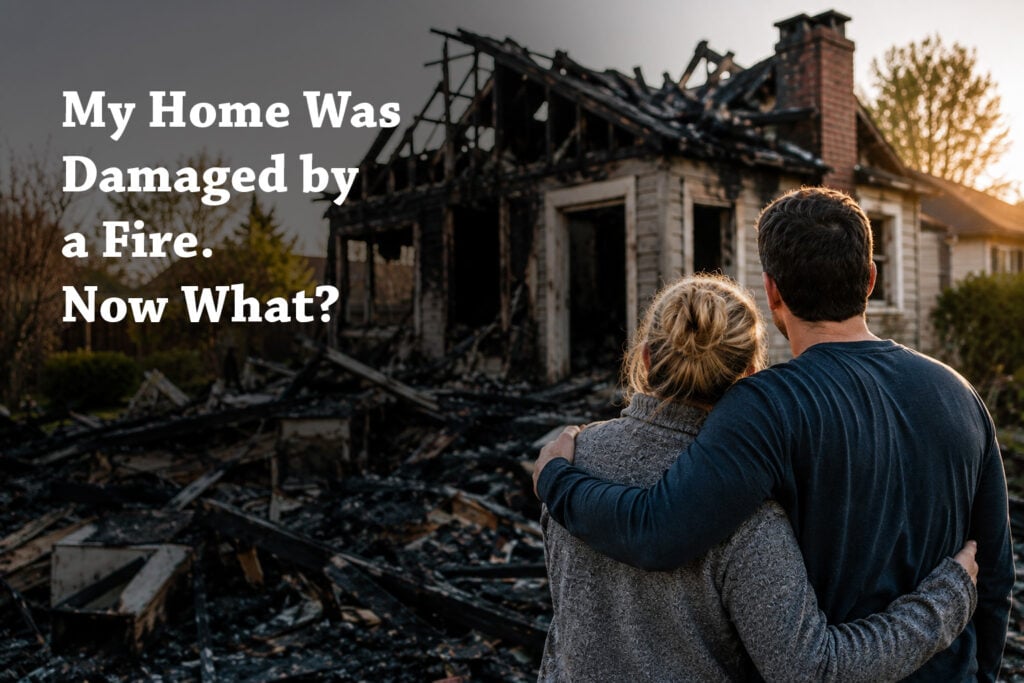
The fire is over, but your problems aren’t.
You’re standing outside looking at what’s left of your home, trying to figure out where your family will sleep tonight. Maybe you’re wondering whether anything inside can be saved. Maybe you’re thinking about the clothes your kids will need tomorrow morning or realizing that you don’t even have a toothbrush.
And then someone from the insurance company starts asking questions.
What was damaged? What did you own? Where are you staying? What happened?
You may be thinking, “I don’t even know where to start.”
If you’ve never dealt with a fire damage insurance claim before, that’s completely understandable. Most people don’t know what their insurance covers until they suddenly need to use it.
And when the fire started somewhere else—like a neighboring home or a wildfire—you may have another question: If I didn’t cause the fire, why am I the one dealing with the damage?
The answer starts with understanding your own insurance coverage and then looking at whether anyone else may be responsible.
Start With Your Own Insurance
If your home or belongings were damaged by a fire, your own insurance policy is usually one of the first places to turn.
That may sound simple, but a major fire can create several different problems at the same time. Your house may need to be repaired or completely rebuilt. Your furniture and belongings may be damaged or destroyed. And if you can’t live at home, your family still needs somewhere to sleep while all of that is happening.
Your insurance policy may provide coverage for each of those things, depending on the policy you have.
Think about what happens if your home is suddenly unlivable. You’re not just looking at the cost of repairing the house. You’re also figuring out where you’re going to live, what you’re going to wear, what your kids need for school, how you’re going to replace the food that was in the refrigerator, and what you’re going to do with everything that can’t be salvaged.
That’s why a fire damage insurance claim can become much bigger than the damage you can see from the street.
Your policy will tell you what is covered and how much coverage you have. But you don’t necessarily need to understand every page of your policy on the first day. Start by figuring out what coverage is available for your home, your belongings, and the expenses you’re facing because you can’t live there.
What Happens to Everything Inside the House?
This is often one of the hardest parts of the process.
It’s one thing to look at a burned house and think, “We lost everything.” It’s another to actually try to make a list of what “everything” means.
What was in the kitchen cabinets? What clothes were in the kids’ closets? How many pairs of shoes did everyone have? What was in the garage?
Then you start remembering the things you haven’t thought about in years: Christmas decorations, camping gear, tools, sports equipment, old photographs, toys, electronics, wedding gifts, and all the little things that somehow accumulated over 10 or 20 years.
Your insurance company may ask you to create an inventory of what was damaged or destroyed. That can feel like an impossible task when you’re already dealing with the loss itself.
Don’t expect yourself to remember everything in one sitting.
Look through photographs and videos from before the fire. A picture of your living room might remind you about the furniture that was there. A video of your child opening presents at Christmas might show you the television, decorations, toys, and other things you had forgotten to include.
Receipts, online purchase histories, bank statements, and emails can also help when you’re putting together your fire damage insurance claim.
You’re essentially rebuilding a picture of the life that was inside your home.
What If You Rent Instead of Own?
The same basic problem exists for renters, but the insurance works differently.
If you rent a house or apartment, the landlord’s insurance generally covers the building itself. It doesn’t automatically cover everything you own inside it.
That’s where renters insurance comes in. A renter’s policy may cover personal belongings and may also help with additional living expenses if a covered fire makes the rental unlivable.
So if an apartment building burns down, the landlord may be dealing with the damage to the building while each tenant is dealing with what happened to their own belongings.
That can be especially confusing when someone says, “The building is insured.”
The building being insured doesn’t necessarily mean everything inside your apartment was insured too.
The question is: What does your own policy cover?
What If the Fire Started at My Neighbor’s Home?
This is where the question can feel particularly unfair.
Imagine your neighbor’s trailer catches fire. The fire spreads from one trailer to another, and suddenly your home is gone too.
You didn’t start the fire. You didn’t cause it. You may have done everything right.
So why would you need to deal with your own insurance company?
Because there are really two separate questions.
The first is: What does my insurance policy cover?
Your insurance company may handle your covered losses under your own policy while the circumstances surrounding the fire are investigated.
The second is: Did someone else do something that makes them legally responsible for what happened?
Those questions don’t necessarily have the same answer.
The fact that a fire started at your neighbor’s property doesn’t automatically mean your neighbor is responsible for your loss. Maybe the fire was caused by something they did. Maybe it wasn’t. Figuring that out requires looking at how the fire started and what happened before it spread.
So you may have your own insurance claim moving forward while questions about someone else’s responsibility are being investigated at the same time.
That can feel confusing, but the two things don’t have to wait for each other.
What If the Fire Was a Wildfire?
Wildfires create a different version of the same problem.
You may have done absolutely nothing to cause the fire. You may have simply been in its path.
And when you’re watching a wildfire approach your neighborhood, you probably aren’t thinking about insurance. You’re thinking about getting your family out, figuring out where you’re going to go, and hoping your house will still be standing when you can return.
If your home is damaged or destroyed, your own homeowners insurance may be the starting point for your fire damage insurance claim.
You’ll still need to understand what your policy covers. What happens to the house? What happens to your belongings? Can you get help paying for somewhere to live while your home is repaired or rebuilt?
The fact that the fire was caused by nature rather than another person’s actions doesn’t make the loss any less significant. It simply means the insurance questions may be different.
What Should I Do After a Fire?
Once everyone is safe, start keeping track of what happened.
If it’s safe to take photographs, take them. They can help document the condition of your home and belongings before anything is cleaned up or removed. The Utah Insurance Department also recommends documenting damage and keeping receipts related to the claim.
Keep your receipts, too.
If you’re staying in a hotel, save the receipt. If you have to buy clothes because everything you owned was inside the house, keep the receipt. If you have emergency repairs done, keep the paperwork. These expenses can seem small compared with losing a home, but they can add up quickly.
If damaged property is still at the home, don’t throw it away simply because it looks unusable. When it’s safe and practical to do so, give the insurance adjuster an opportunity to document the damage first.
And keep your insurance conversations organized. Save emails, letters, estimates, and other claim documents in one place.
You may not know yet which pieces will matter later. It’s much easier to have them than to try to reconstruct what happened months afterward.
What If the Insurance Company Says Something Isn’t Covered?
This is where a fire damage insurance claim can become frustrating.
You may call the insurance company expecting a straightforward answer and hear something you don’t understand.
“That’s not covered.”
“That’s subject to a different limit.”
“We’ll need more information before we can pay that.”
And you’re left thinking, “What does that actually mean?”
Sometimes the answer really is straightforward. Other times, the reason matters.
Maybe the issue is the amount of coverage you purchased. Maybe it’s how the insurance company is valuing your belongings. Maybe there is a question about whether a particular loss is covered at all.
If something doesn’t make sense, ask the insurance company to explain it. Ask what part of the policy they’re relying on and what information they need from you.
And if you’re still not sure what you’re being told, that’s a good time to have someone else look at it with you.
You Don’t Have to Figure Out the Whole Claim at Once
After a fire, there can be an overwhelming number of decisions to make.
Where will you sleep tonight? What happened to your belongings? What will happen to your home? How are you going to replace things you never imagined losing?
You don’t have to solve all of those problems on the first day.
Start with your family’s safety. Then begin working through the practical pieces: contact your insurance company, document the damage, keep track of your expenses, and start putting together a picture of what was lost.
If you’re having trouble understanding your fire damage insurance claim, what your insurance should cover, whether someone else may be responsible for the fire, or what to do when the insurance company gives you an answer that doesn’t make sense, we’re happy to sit down with you and go through it.
Sometimes the most helpful first step is simply having someone say, “Okay. Let’s look at this together and figure out what happens next.”