Most people assume that if no one is injured in a car accident, the insurance process should be straightforward. In reality, property damage claims can become stressful quickly, especially when insurance companies disagree about who is at fault.
As a property damage car accident attorney will often tell clients, disputes over responsibility, repair costs, and deductibles are common — even when everyone walks away unhurt. Understanding what happens if insurance says you’re partially at fault can help you avoid delays, unexpected bills, and unnecessary stress.
I work in marketing at a personal injury law firm, not as an attorney, but I experienced this process firsthand after a crash that damaged my vehicle but caused no injuries. Even with legal knowledge in the family, the experience was far more stressful than I expected, and it revealed how confusing property damage claims can be for everyday drivers.
Property Damage Car Accidents Can Still Create Serious Problems
When a crash doesn’t result in injuries, insurance companies often treat it as a low priority. That doesn’t mean the consequences are minor.
In property damage car accidents, drivers commonly face delays in getting vehicles repaired, disputes over who caused the crash, and pressure to accept a partial settlement just to get the car back.
These issues are especially common when insurance companies disagree about how the accident happened – or when no independent witnesses are available.
When Fault Isn’t as Clear as It Seems
In 2022, I was driving home from work at dusk. The sun was setting directly behind me, making visibility difficult for oncoming traffic. I drive a silver crossover SUV, which didn’t help with visibility.
I approached a busy intersection near a shopping complex. Traffic was moderate — not heavy, but steady. A truck was turning left in front of me at the light, so I slowed to give it room. Then an SUV turned into the shopping complex just past the intersection, and I waited to make sure it cleared before accelerating.
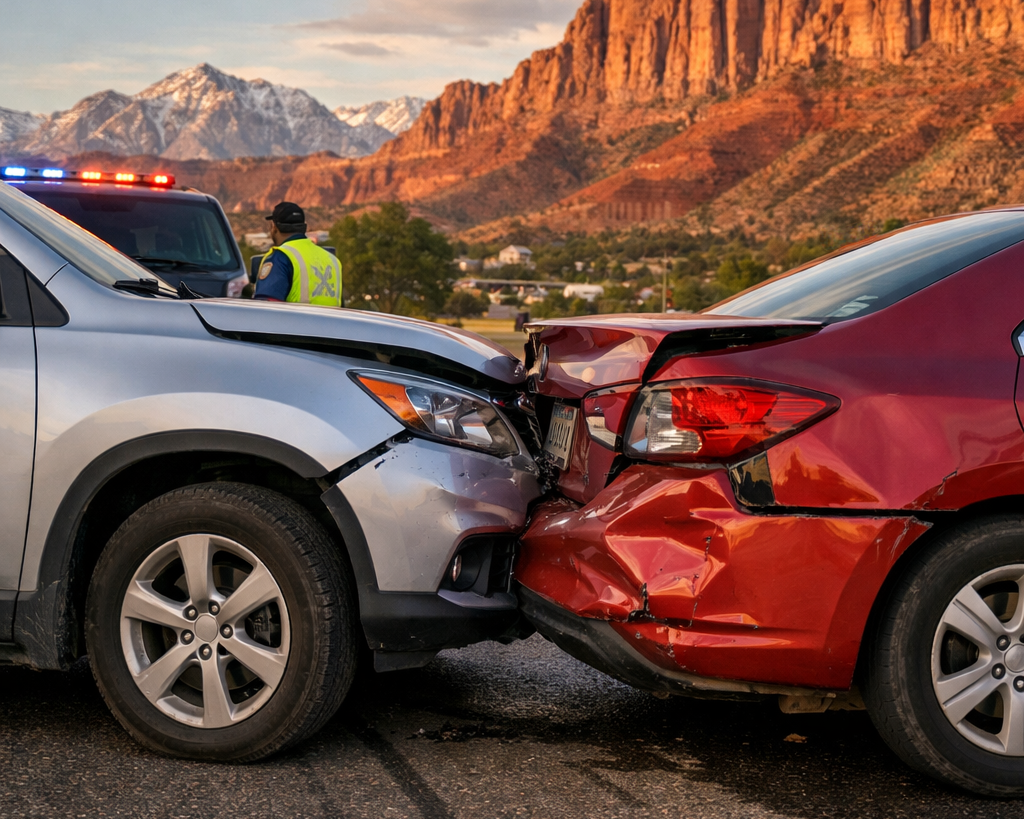
What I didn’t see was another car pulling out of the complex behind that SUV at the same time. When I accelerated, I collided with that vehicle. There was no way I could have seen her, but my vehicle struck hers.
Thankfully, no one was injured. Her car spun, airbags deployed, and my front end was damaged but drivable. I was six months pregnant at the time, so my biggest concern was my baby – fortunately, everything was fine.
Police responded, along with fire and ambulance crews. The other driver was disoriented and later received a ticket. No one actually witnessed the crash itself.
How Insurance Handles Property Damage Claims
After the accident, I did what most people do: I filed claims with both insurance companies and took my car to a collision repair shop. Because, while drivable, there was quite a bit of damage to the front of my vehicle, I left it at the shop and drove a spare car.
Then… nothing happened.
Weeks passed. The repair shop couldn’t get updates from insurance. Adjusters were difficult to reach. No decisions were being made. This is a common issue in car accident insurance delays, especially when fault is being evaluated.
During this time, I also received a subpoena to appear in court because the other driver was contesting her ticket. At seven months pregnant, I sat through nearly two hours of hearings before our case was called. The other driver appeared remotely and told a completely different version of events.
In the end, the judge sided with me and indicated the crash appeared to be her fault, and the ticket would stay.
What Happens If Insurance Says You’re Partially at Fault?
Despite the court outcome, insurance eventually determined that I was 33% responsible for the accident. As a result, they refused to cover the full cost of repairs. The remaining portion would be handled by my own insurance.
This situation is surprisingly common, and it’s exactly why many people search for answers to what happens if insurance says you’re partially at fault.
When insurers assign shared fault, it can mean:
- You may have to pay a deductible upfront
- Repairs may be delayed until liability is resolved
- Insurance may refuse to pay the full repair amount
- You may feel pressured to accept a decision you disagree with
At that point, I just needed my car back. The vehicle was older, and honestly, I was concerned it would be totaled (a topic for another day). It wasn’t, and even though I didn’t agree with the decision, I paid the deductible and moved forward.
Deductibles, Reimbursement, and What Many Drivers Don’t Realize
Here’s the part many people don’t know: In some cases, your insurance company can pursue reimbursement from the other insurer after repairs are completed.
That’s exactly what happened in my situation. My insurance paid for the repairs, then later recovered the funds from the other driver’s insurance. A few months later, I received a check refunding my deductible.
This outcome isn’t guaranteed in every case, and it depends heavily on evidence, policy language, and how aggressively insurers pursue reimbursement. But it’s an important example of why property damage claims shouldn’t be brushed off as simple.
When a Property Damage Car Accident Attorney Can Help
Property damage car accidents may not involve hospital bills, but they can still disrupt your life, finances, and peace of mind. Insurance delays, partial fault determinations, and repair disputes are far more common than most drivers expect.
Even when no one is injured, there are times when speaking with a property damage car accident attorney can make a difference – especially when:
- Insurance companies dispute fault
- Your vehicle repairs are delayed indefinitely
- You’re being asked to pay out of pocket for damage you didn’t cause
- Insurance won’t pay the full repair amount
- You’re confused about deductible reimbursement
An attorney can help explain your options, communicate with insurers, and push the claim forward – without assuming you’re trying to pursue an injury case.
This was my personal experience – not legal advice – and every situation is different. But if your claim isn’t progressing or doesn’t feel right, it’s worth getting clarity sooner rather than later.
For drivers dealing with these issues in Southern Utah, sometimes, just understanding the process can relieve a lot of stress. A St. George car accident attorney familiar with local insurers and claims practices can be especially helpful. Give us a call.