No one plans for the conversations that happen after a car accident.
We think about the crash.
We think about the damage.
We think about getting home safely.
We don’t usually think about the phone calls that follow.
These days, most of us ignore calls from numbers we don’t recognize. But after a car accident, that unknown number might be the repair shop, a medical provider, or someone handling the insurance claim. Suddenly, every call feels like it could be important.
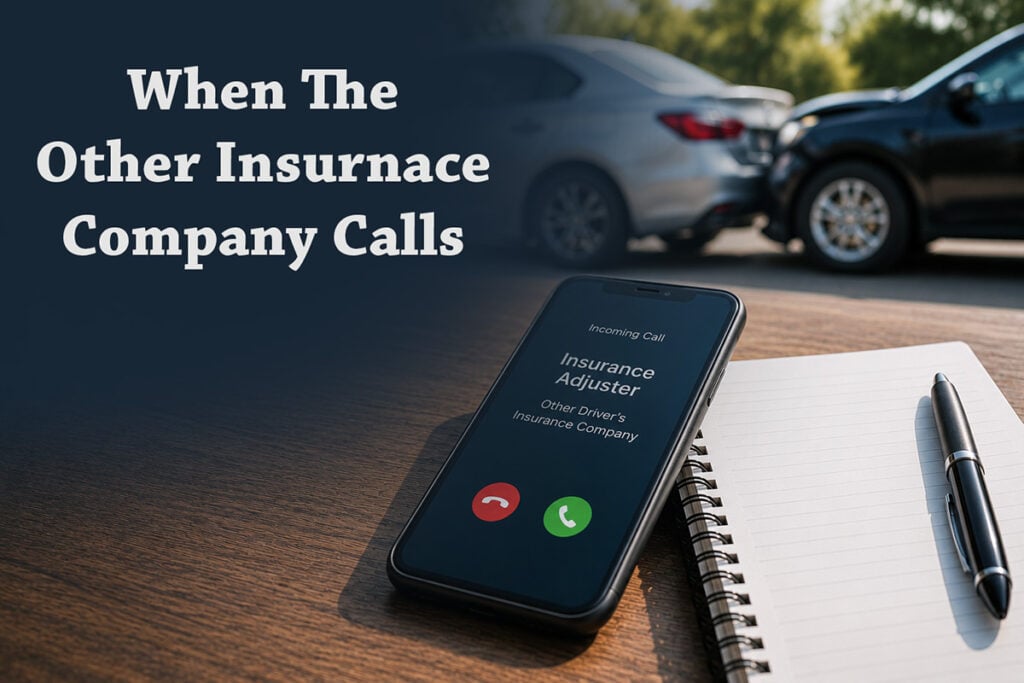
One of those calls will often be from the other driver’s insurance company.
If you’ve never been through an insurance claim before, it’s natural to wonder whether you should talk to them at all.
The short answer is yes—but it’s helpful to understand why they’re calling and what to expect before you pick up the phone.
If you’re still trying to figure out everything that happens after a crash, our guide to what to do after a car accident walks through the entire process from the accident scene to resolving your claim.
Why Is the Other Driver’s Insurance Company Calling?
After a car accident, the other driver’s insurance company begins gathering information about what happened. The person who calls you is often an insurance adjuster. Their job is to understand what happened, gather information from the people involved, and begin working through the claim.
During that first conversation, they may ask about:
• When and where the accident happened.
• Who was involved.
• Whether you’ve received medical treatment.
• The damage to your vehicle.
• How they can contact you throughout the claims process.
These questions are a normal part of the process. At this stage, they’re trying to understand what happened and begin moving the claim forward.
Do I Have to Answer Every Question Right Away?
You don’t have to feel pressured to answer every question immediately.
If you’re still receiving medical treatment—or if new aches and pains are starting to appear—it’s okay to say so.
It’s always better to answer questions honestly than to guess. If you don’t know an answer or aren’t sure, it’s perfectly acceptable to say so rather than trying to fill in the blanks.
Remember, the insurance claim is a process. You don’t have to have every answer the first time the phone rings.
What If They Ask for a Recorded Statement?
One question that sometimes catches people off guard is whether they’re willing to provide a recorded statement.
A recorded statement is simply a conversation that’s being documented as part of the insurance claim. The adjuster may explain why they’re requesting it and how it will be used during their investigation.
Before agreeing, make sure you understand what you’re being asked to provide and why. If you’re still being evaluated by a doctor or you’re unsure about the full extent of your injuries, it’s reasonable to take the time you need before making decisions about your claim.
The goal isn’t to avoid communicating – it’s to make sure you understand the process and feel comfortable participating in it.
Remember, You Can Ask Questions Too
Many people feel like they’re the only one being interviewed during these conversations.
In reality, you can ask questions too.
For example, you might ask:
• What happens next?
• Will I be working with the same insurance adjuster throughout the claim?
• Is there any information you still need from me?
• How do I submit additional medical bills or records if I receive them later?
Asking questions can help you better understand the claims process and know what to expect in the days and weeks ahead.
Understanding the Process Can Make the Call Less Stressful
Receiving a call from the other driver’s insurance company doesn’t have to be intimidating.
Like many parts of the claims process, it simply feels unfamiliar because most people don’t go through it very often.
Knowing why they’re calling, understanding the kinds of questions they may ask, and recognizing that it’s okay to take your time can help you approach the conversation with confidence.
You don’t have to know every answer the moment your phone rings. But understanding what’s happening can make the conversation feel a little less overwhelming – and help you make informed decisions as your claim moves forward.