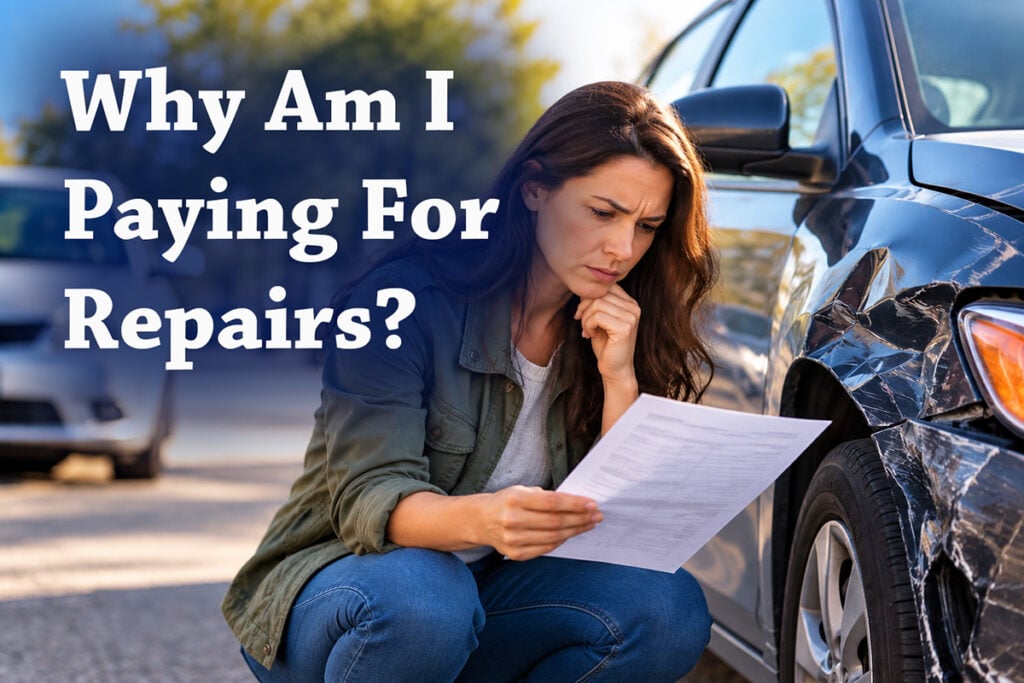
You just want your car back.
Since the accident, you’ve been trying to figure out when it can be repaired. Every time you call for an update, you hear some version of the same thing: they’re still waiting for approval from the other driver’s insurance company.
Meanwhile, life keeps moving. You still have to get to work, take the kids where they need to go, run errands, and get through your regular routine. Maybe you’re sharing a vehicle with your spouse, making do with a car that wasn’t meant to be your daily driver, or living with a rental car and wondering how much longer you can afford to keep it. You don’t know how much longer it will take, and you can’t seem to get a clear answer.
When someone else caused the accident, it’s frustrating to feel like you’re the one paying the price for it.
If you’re dealing with car accident property damage, you may have more than one way to handle the repairs. One option is to file a claim through your own collision coverage instead of waiting for the other driver’s insurance company to accept responsibility. The trade-off is that you’ll generally have to pay your deductible upfront.
Here’s why that happens, how you may be able to get that money back, and what to consider before deciding how to handle your claim.
Why Is the Other Driver’s Insurance Holding Up My Repairs?
When you file a claim with the other driver’s insurance company, that company generally needs to investigate the accident before agreeing to pay for your vehicle damage. It may need to review the drivers’ accounts, inspect the damage, or determine who was responsible.
That process can take time. It can take even longer if the drivers disagree about what happened or the insurance companies don’t agree on fault. Until the other insurer accepts responsibility and approves payment, you may be left waiting for repairs to move forward.
From your perspective, though, the result is the same: your car is still sitting there, and you’re still trying to figure out how to get around without it.
The important thing to understand is that you don’t always have to wait for the other driver’s insurance company to resolve the claim before exploring other options. If you have collision coverage through your own policy, you may be able to use it to pay for covered damage to your vehicle while the question of fault is still being worked out.
Your own insurer will still need to review the claim and confirm that your policy covers the damage. If it does, your insurer can generally arrange payment for covered repairs, minus your deductible. That means you may be able to get your car repaired sooner, but you’ll likely need to pay part of the cost yourself at first.
Can I Get My Deductible Back?
Possibly. Paying your car insurance deductible to get your car repaired doesn’t necessarily mean you’ll be responsible for that cost in the end.
When you use your own collision coverage, your insurance company may try to recover the money it paid for your repairs from the at-fault driver or their insurance company. This process is called subrogation.
Think of it this way: your insurer pays for covered damage under your policy, then seeks reimbursement from the party it believes is responsible. If your insurer successfully recovers money, you may receive some or all of your deductible back.
However, deductible reimbursement isn’t guaranteed. The other driver or their insurer may continue to dispute responsibility, there may be questions about available coverage, or your insurer may be unable to recover all the money it paid. The amount you get back and how long it takes depend on the circumstances and the outcome of the recovery process.
This is one reason it’s important to understand both the immediate cost of using your own coverage and what might happen afterward. You may be able to get your car repaired without waiting for the other insurer’s decision, but you shouldn’t assume you’ll automatically get your deductible back.
Does Using My Own Insurance Mean I’m Admitting Fault?
No. Filing a claim under your own collision coverage doesn’t, by itself, mean you’re admitting that you caused the accident.
Your policy may cover damage to your vehicle even while the question of fault is still being investigated, subject to the policy’s terms and conditions. Whether your own insurer covers the repairs is a separate question from who was responsible for the crash.
The fault dispute may still need to be resolved, even if you use your own coverage to get your vehicle repaired. Using your policy is a way to access coverage you may already have; it doesn’t automatically settle who caused the accident or determine what the other driver ultimately owes.
What Should I Ask Before Deciding How to Handle Repairs?
If you’re stuck waiting for approval, it helps to understand what each option means for your repairs and your wallet. Here are some questions worth asking before you decide how to proceed.
- Can I use my collision coverage to get the repairs started? Ask your insurer whether your policy covers the damage, what deductible applies, and what needs to happen before repairs can move forward.
- What’s holding up the other driver’s claim? Ask whether the delay is related to the fault investigation, the repair estimate, or another issue. Understanding what’s causing the delay may help you decide whether waiting is reasonable.
- Will my insurance company pursue subrogation? If you use your own coverage, find out whether your insurer intends to seek reimbursement from the other driver or their insurance company.
- Could I get my deductible back? Ask how your insurer handles deductible reimbursement and what happens if it recovers only part of the money it paid.
- What happens next, and when should I expect an update? Ask each insurer what still needs to happen before repairs can be approved. You may not get an exact date, but you can ask for a clear explanation of the remaining steps.
Keep copies of repair estimates, photos, claim information, and communications with the insurance companies. These records can help you answer questions and track what’s happening with your claim.
You Don’t Have to Assume Waiting Is Your Only Option
When another driver damages your car, the insurance process can leave you feeling like your life is on hold. You’re trying to get back to normal, but you’re still waiting for answers about something as basic as when you’ll have your car again.
If the other driver’s insurance company hasn’t approved the repairs, using your own collision coverage may be another way to move forward. You’ll generally have to pay your deductible upfront, but your insurer may later pursue subrogation and recover some or all of that cost.
Every claim is different. Your coverage, the circumstances of the accident, and the status of the insurance investigation can all affect your options. When you’re dealing with car accident property damage, understanding your insurance options can help you decide what makes the most sense for your situation.
You may not be able to control how quickly the insurance companies resolve a dispute, but understanding your options can help you decide how to move forward.