Most people involved in a serious car accident remember certain details forever.
The sound of metal colliding.
The confusion afterward.
The flashing lights.
The uncertainty of what comes next.
But many people remember something else, too.
The stranger who stopped.
For one woman involved in a Utah car accident several years ago, that stranger wasn’t another driver involved in the crash. He wasn’t a family member. He wasn’t even someone who witnessed the accident happen. He heard the collision from a nearby parking lot.
As many people would, he could have looked over, assumed someone else would handle it, and continued with his day.
Instead, he walked toward the problem.
At the scene were two young women. One was in her late twenties and several months pregnant with her first child. The other had been knocked unconscious when her airbag deployed and was still trying to understand what had happened.
Neither knew how serious the situation was. Neither knew what the next few hours would look like. And neither needed someone to solve the problem.
They needed someone to stay.
The man asked how he could help. He called 911. He helped them out of their vehicles. He stayed while they waited for emergency responders to arrive.
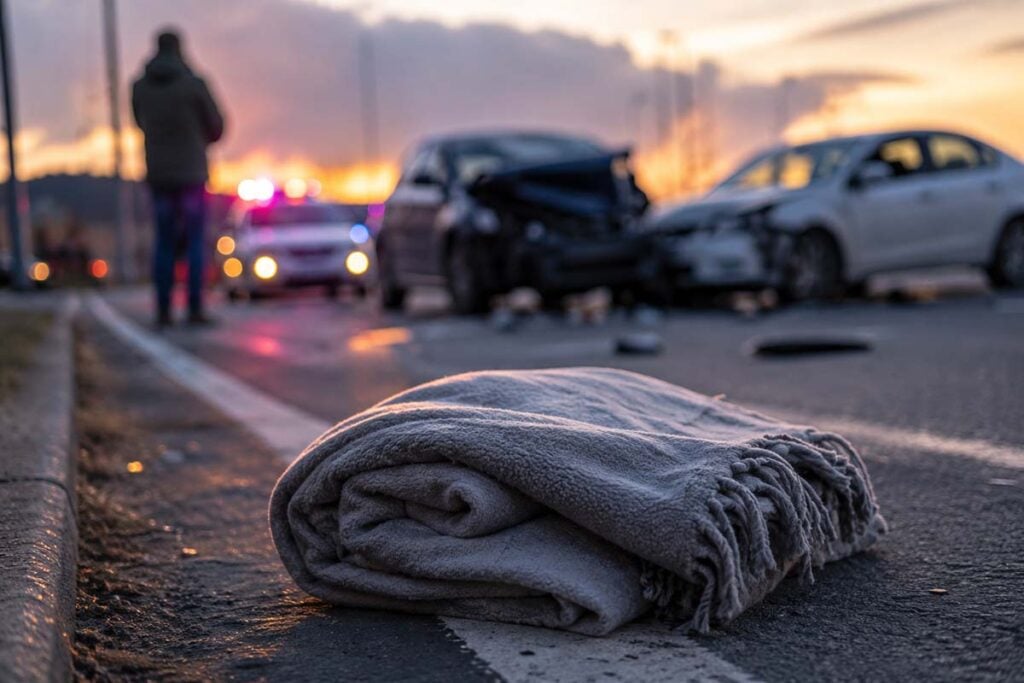
And when he noticed one of them sitting outside in the cold, shaken and worried, he pulled a blanket from his vehicle and handed it over.
The paramedics eventually arrived, followed by law enforcement. As the situation slowly became more manageable, the man stayed. Only after both women had been checked by medical personnel and everything seemed under control did he prepare to leave.
When the blanket was offered back, he refused to take it.
“Someone once gave it to me when I needed help,” he explained. “Now it belongs to you.”
Years later, that blanket still sits at the foot of a bed. Not because it solved the problems of that day, or because it was expensive, or because it carried any special significance before the accident. It remains because it represents something bigger.
In a moment filled with uncertainty, a stranger chose to stay.
Most People Who Help Aren’t Experts
Stories like this are probably more common than people realize.
Most people who witness a car accident aren’t emergency responders. They aren’t doctors. They aren’t trained investigators.
They’re simply ordinary people who happen to find themselves near someone else’s worst day.
And that’s exactly why so many people struggle with the question of what to do after witnessing a car accident.
Should you stop? Would you help or just get in the way? What if you don’t know what to do?
Those questions are completely normal.
Many people assume helping requires special training or expertise. In reality, some of the most meaningful help comes from people doing simple things well.
Calling 911. Remaining calm. Providing information to emergency responders. Offering a witness statement if needed. Making sure someone isn’t facing a frightening situation alone.
The people who make a difference after an accident are often not the people with all the answers. They’re the people who show up.
What If You Witness a Car Accident?
For people wondering what to do after witnessing a car accident, the answer is usually simpler than they expect.
Whether the crash occurs on a busy St. George intersection, a rural highway, or a parking lot, witnessing a Utah car accident often leaves people wondering whether they should get involved.
Every situation is different, and personal safety should always come first.
If you witness a car accident, the most important thing is to assess the situation before jumping in. Emergency services should be contacted if they have not already been notified. If someone appears seriously injured, it’s generally best to avoid moving them unless there is an immediate danger.
Beyond that, there is often value in simply being present.
Witnesses may be able to provide information about what happened. They may be able to help direct emergency responders to the scene. Sometimes they can offer reassurance to people who are scared, injured, or overwhelmed.
Helping doesn’t always look dramatic. Most of the time, it looks a lot like patience, calmness, and common sense.
Why People Hesitate
One reason people sometimes hesitate to help is that they worry about liability.
What if they make a mistake? What if something goes wrong?
Questions like these are part of why many people search for information about the Good Samaritan Law, which they often hear mentioned after emergencies.
While the specifics of the law depend on the circumstances, the general purpose is straightforward. Good Samaritan protections exist to encourage reasonable assistance during emergencies without creating unnecessary fear for people who are genuinely trying to help.
In other words, the law recognizes something communities have always known. – When something bad happens, people are usually better off when someone stops.
The People People Remember
Most accidents eventually become paperwork.
Insurance claims are processed. Vehicles are repaired. Medical treatment ends. Life moves forward.
But the people involved often remember the human moments long after everything else fades.
The witness who stayed to give a statement. The stranger who made a phone call. The person who helped keep someone calm while waiting for help to arrive. The man who heard a crash from a nearby parking lot and walked toward it.
Long after the damaged vehicles were repaired and the insurance claim was finished, the blanket remained at the foot of the bed.
A reminder that helping doesn’t always mean having all the answers.
Sometimes it simply means staying.
And for those who do find themselves involved in an accident, whether as a driver, passenger, or even a witness trying to make sense of what happened, understanding what comes next can make an overwhelming situation feel a little more manageable.