
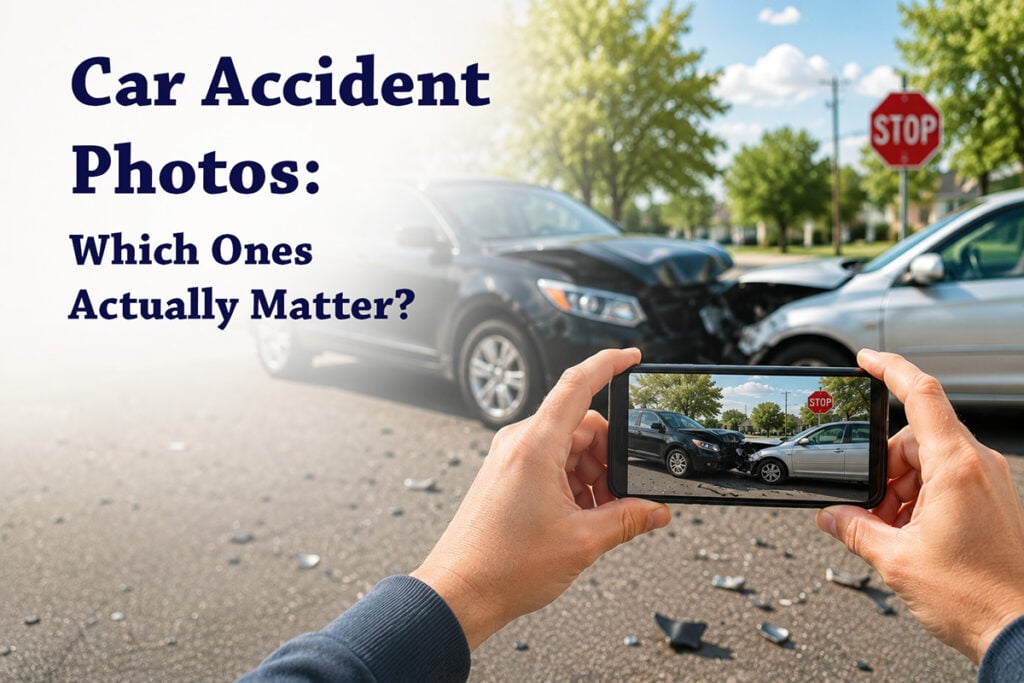
When you’re standing on the side of the road after a car accident, you probably aren’t thinking about taking car accident photos. You’re checking to make sure everyone is okay, talking with the police, calling a spouse or family member, or simply trying to calm down after what just happened. If you or someone else is injured, your focus is probably on getting everyone somewhere safe and ok – not documenting every detail of the accident.
Later, though, the insurance company may ask whether you have any car accident photos to share.
That’s when many people start wondering:
“Did I take the right ones?”
“Did I miss something important?”
Understanding why the insurance company wants photos can help you know what to capture if the opportunity presents itself.
Why Does the Insurance Company Want Photos?
Most of the time, the insurance company isn’t asking for photos because they doubt your version of events. They’re asking because photos preserve details that can disappear surprisingly quickly.
When an adjuster reviews a claim, they’re trying to understand what happened before vehicles are repaired, the scene is cleaned up, and injuries begin to heal. A photograph captures a moment in time that everyone can go back and reference later.
Take One Step Back First
It’s natural to walk straight over to the dent in your bumper and snap a close-up.
Before you zoom in, though, take one step back.
Wide photos of the entire accident scene preserve the bigger picture before anything changes.
Imagine someone who wasn’t there trying to understand what happened. It’s a little like handing them a puzzle with only one piece. A close-up of a dent shows that something happened. A few wider photos help explain the whole story.
Then Capture the Vehicle Damage
Once you’ve documented the overall scene, move in closer.
Take photos of the damage to every vehicle involved, not just your own. If you can, photograph each side of the vehicles along with any obvious damage.
These photos preserve what the vehicles looked like before repairs begin and create a clear record of the damage immediately after the crash.
Don’t Forget the Details Around You
Sometimes it’s the smaller details that become surprisingly important later.
If it’s safe to do so, consider taking photos of:
- Skid marks
- Broken glass or debris
- Traffic signs
- Construction zones
- Obstructed views
- Weather conditions
- Damage to guardrails, curbs, or other property
You don’t have to know whether those details will matter. If they’re part of the accident scene, they’re worth documenting.
If You’re Injured, Document That Too
Vehicle damage tells part of the story, but your injuries tell another.
Bruises often become more noticeable over the next day or two. Cuts begin healing, swelling changes over time, and injuries that seemed minor immediately after the accident may become more visible.
If you have visible injuries, taking a few photos throughout your recovery can help document how those injuries changed over time.
What If I Didn’t Take Any Photos?
First, don’t panic.
Many people don’t take a single picture after an accident. Sometimes they were injured. Sometimes the police needed everyone moved quickly to keep traffic flowing safely. Sometimes everything happened so quickly that taking pictures never crossed their mind.
Fortunately, your own car accident photos aren’t the only way an accident gets documented.
Police officers often take photographs as part of their investigation, and many accident reports include those images. Depending on where the accident happened, there may also be photos or video from dash cameras, nearby businesses, witnesses, or services like Collision Cam. Repair shops and tow companies may also document vehicle damage before repairs begin.
Every accident is different, and every claim is built using the information that’s available.
A Few Photos Can Go a Long Way
After a car accident, your first priority should always be safety.
If you’re able, taking a few car accident photos before the vehicles are moved can preserve details that are difficult – or impossible – to recreate later. You don’t need dozens of pictures or professional photography skills. A handful of thoughtful photos can go a long way toward documenting what happened.
And if you’re unsure whether the information you have is enough, we’d be happy to help you understand what other information may still be available.